

I thought Free Zone companies don’t have to worry about that…”
I hear this line at least three times a week from international founders, especially from the US, UK and Europe, who are setting up businesses in Dubai.
And I understand where it comes from.
Most people still assume that a UAE Free Zone setup means zero compliance pressure and full insulation from local tax rules.
That assumption is outdated.
Yes, the UAE remains one of the most business-friendly jurisdictions globally, with 100% foreign ownership, strong tax incentives, and world-class Free Zones like DMCC, DIFC, ADGM, and JAFZA.
But the regulatory environment has matured significantly over the last few years.
And this is where many founders get caught off guard.
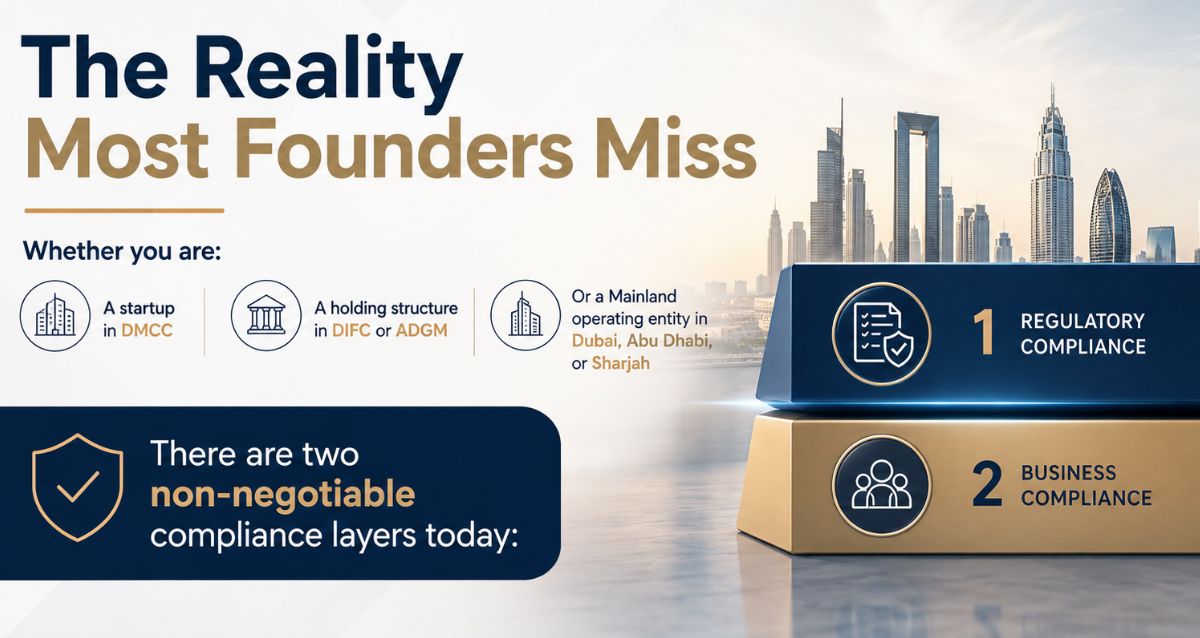
The Reality Most Founders Miss
Whether you are:
- A startup in DMCC
- A holding structure in DIFC or ADGM
- Or a Mainland operating entity in Dubai, Abu Dhabi, or Sharjah
There are two non-negotiable compliance layers today:
Corporate Tax Registration is Mandatory (Even for Free Zones)
One of the biggest misconceptions is that Free Zone companies are “outside” the UAE tax system.
That is no longer true.
Under the UAE Corporate Tax framework, every entity, regardless of Free Zone status, must:
- Register with the Federal Tax Authority
- Assess its tax position correctly
- Maintain proper financial records
- Determine eligibility for Free Zone tax benefits (where applicable)
The key point is simple:
· Free Zone status does not remove compliance obligations it only determines tax treatment, not tax existence.
For many international founders (especially US-based entrepreneurs used to Delaware LLC flexibility), this is often the first real regulatory surprise.
AML Compliance is No Longer Optional
If your business falls under “Relevant Activities” or operates in regulated sectors, AML (Anti-Money Laundering) obligations are strict and actively enforced.
This includes:
- Proper UAE AML registration (if applicable)
- Appointment of compliance officers in certain cases
- Ongoing transaction monitoring
- Suspicious activity reporting obligations
And the most critical part:
- Non-compliance penalties are not symbolic; they are financial, operational and reputational.
We have seen businesses underestimate this and only realise the exposure when they are already under review.
The Bigger Picture (What We See at Flying Colour Tax Consultants)
At Flying Colour Tax Consultants, we work closely with international founders entering the UAE, especially from the United States, Canada, and Europe.
And there is a clear pattern:
- Most businesses don’t fail because of taxes.
- They struggle because of structure and timing mistakes made at the setup stage.
The difference between:
- A clean, scalable Free Zone structure VS
- A costly restructuring exercise later
often comes down to advice taken in the first 30 days.
Why This Matters for US & Global Founders
If you are coming from the US market, you are used to:
- IRS-driven reporting frameworks
- Clear but heavy compliance structures
- Predictable tax residency rules
The UAE is different.
It is:
- Faster to set up
- More flexible in structuring
- But highly dependent on correct classification and ongoing compliance discipline
This is why “setup advice” in the UAE is not just legal it is strategic.
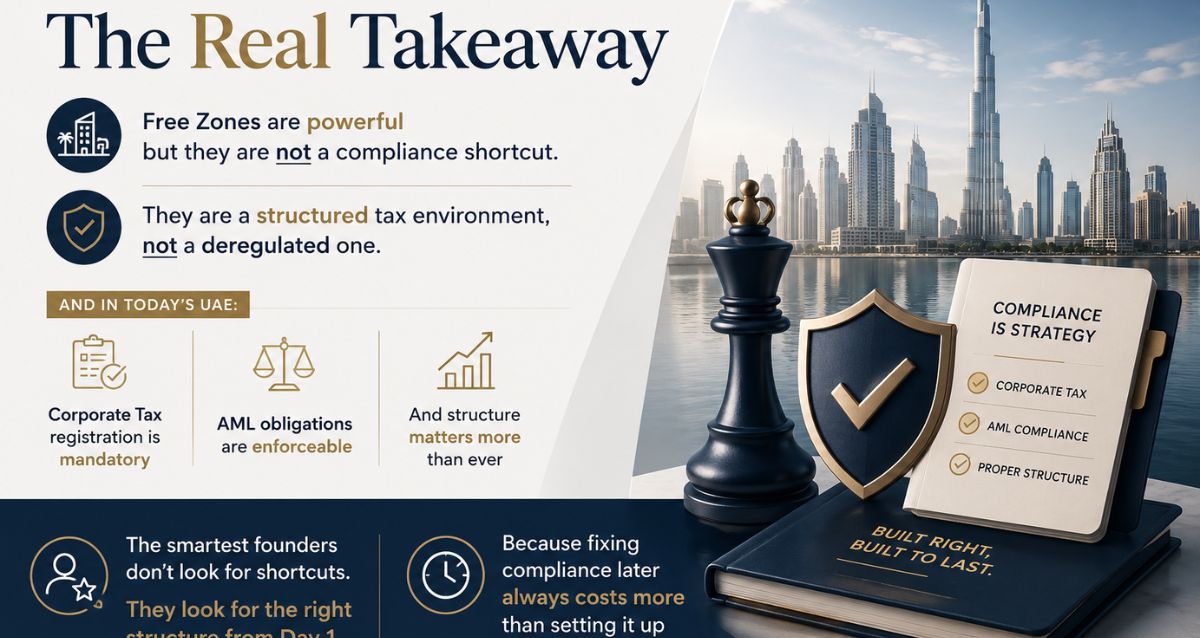
The Real Takeaway
Free Zones are powerful but they are not a compliance shortcut.
They are a structured tax environment, not a deregulated one.
And in today’s UAE:
- Corporate Tax registration is mandatory
- AML obligations are enforceable
- And structure matters more than ever
The smartest founders don’t look for shortcuts.
They look for the right structure from Day 1.
Because fixing compliance later always costs more than setting it up correctly in the beginning.
How We Help at Flying Colour Tax Consultants?
At Flying Colour Tax Consultants, we support founders and global businesses with:
- UAE Free Zone & Mainland structuring
- Corporate Tax registration and advisory
- AML compliance setup and documentation
- Cross-border structuring for US, UK and international entities
- Ongoing regulatory compliance support
Our focus is simple:
Build it right once, so you don’t have to rebuild it later.
If you are setting up in Dubai or already operating in a Free Zone and are unsure about your compliance position, it is worth reviewing your structure early.
Because in the UAE, clarity upfront is always cheaper than correction later.
FAQs
1. Do Free Zone companies need to register for Corporate Tax in the UAE?
Yes. All UAE businesses, including Free Zone companies, are required to register for Corporate Tax with the Federal Tax Authority (FTA), regardless of whether they qualify for tax benefits.
2. Can a Free Zone company benefit from a 0% Corporate Tax rate?
Potentially, yes. Eligible businesses that meet the conditions of a Qualifying Free Zone Person may benefit from a 0% Corporate Tax rate on qualifying income.
3. Are Free Zone companies required to maintain accounting records?
Yes. Free Zone entities must maintain proper accounting records, supporting documentation, and financial statements to comply with UAE Corporate Tax and regulatory requirements.
4. What are the AML compliance requirements for Free Zone businesses?
Depending on the nature of the business, AML requirements may include customer due diligence, transaction monitoring, maintaining records, appointing a compliance officer, and reporting suspicious activities.
5. What penalties apply for non-compliance with Corporate Tax or AML regulations?
Businesses may face administrative penalties, fines, operational restrictions, reputational damage, and additional regulatory scrutiny if they fail to meet compliance requirements.
6. Is it possible to amend a company structure after Free Zone registration?
Yes. However, restructuring after incorporation can be time-consuming and costly. It is generally more efficient to establish the correct legal and tax structure from the beginning.
7. Why should businesses seek professional advice before setting up a Free Zone company?
Professional advisors can help determine the most suitable structure, assess tax implications, ensure AML compliance, and reduce the risk of costly compliance mistakes in the future.
(SSK)*
To learn more about UAE Free Zone Compliance 2026: Corporate Tax & AML Rules, book a free consultation with one of the Flyingcolour team advisors.
Disclaimer: The information provided in this blog is based on our understanding of current tax laws and regulations. It is intended for general informational purposes only and does not constitute professional tax advice, consultation, or representation. The author and publisher are not responsible for any errors or omissions, or for any actions taken based on the information contained in this blog.