

DMCC Audit Deadline 2026
For companies in the Dubai Multi Commodities Centre, the DMCC audit deadline 2026 generally means submitting audited financial statements within 180 days of the financial year-end; for businesses closing on 31 December 2025, that usually falls in June 2026, with a possible extension to 30 September 2026. Whether you run a trading company, consultancy, start-up, or multinational branch, meeting that deadline is essential to protect your trade licence, avoid penalties, and maintain smooth operations and investor confidence in the free zone.
Annual audit compliance is compulsory for all registered DMCC entities, and all DMCC companies must submit audited financial statements every year, including active businesses as well as companies with zero or minimal operational activity. Many companies leave audit preparation too late, only to find missing financial records, documentation gaps, or limited auditor availability.
This guide is written for UK-based entrepreneurs, start-ups, and SMEs operating in, or planning to expand into, the DMCC free zone and needing clear direction on audit and financial reporting obligations. It explains the DMCC audit submission timeline, the audit process, compliance requirements, the role of DMCC-approved auditors, penalties for late filing, practical steps to stay compliant, and how Flyingcolour® can support your business.
Understanding DMCC Audit Requirements
DMCC is one of the most highly regulated unincorporated areas in all of Dubai. To maintain transparency and financial accountability, organisations listed in the open sector must comply with annual financial reporting obligations set by the DMCC authority under the DMCCA company regulations, and this annual audit obligation is a key regulatory requirement.
DMCC Auditing Standards 2026 require organisations to maintain appropriate accounting statistics and post-audit accounts prepared in accordance with applicable accounting standards. In practice, these reports should follow international financial reporting standards and be submitted as IFRS-compliant financial statements. These requirements help ensure a certain amount of financial transparency and help with regulatory oversight.
The annual audit process performs several tasks:
-
Confirms monetary accuracy
-
Verifies compliance with regulations
-
Supports corporate tax reporting
-
Increases investor confidence
-
Makes it easier to renew licenses
-
It strengthens the credibility of the company.
For organisations seeking continued growth and regulatory compliance, dmcc audit mandate applies to DMCC member companies, regardless of size.
What Is the DMCC Audit Deadline 2026?
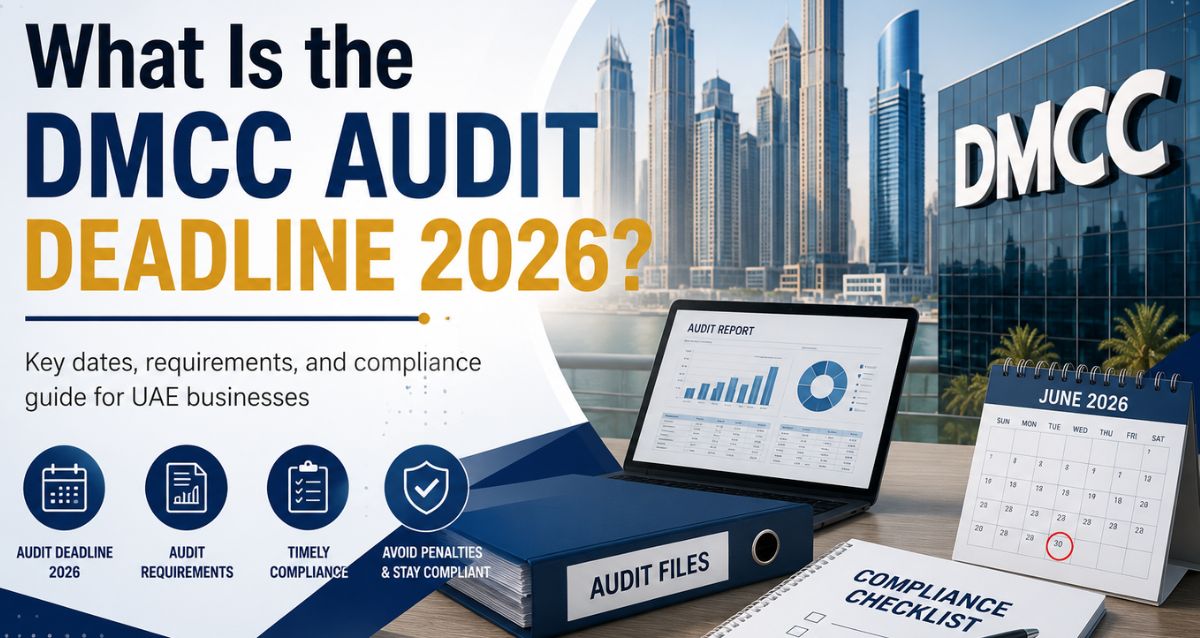
The DMCC audit deadline again sets the 2026 closing date by which registered companies must submit DMCC audited financial statements for the relevant financial year.
For agencies during the 12 months of the fiscal year ending December 31, 2025, two regulatory sources indicate that the typical filing date falls across the June 2026 moratorium, based entirely on the 180-day notice requirement. Businesses should monitor the DMCC audit submission deadline and prepare drawings closer to this date instead of relying on potential extension announcements.
Key Compliance Timeline
|
Event |
Timeline |
|
Financial Year End |
31 December 2025 |
|
Audit Preparation |
January–April 2026 |
|
Audit Finalization |
May–June 2026 |
|
DMCC Audit Report Submission |
By June 2026 |
|
Compliance Confirmation |
After Approval |
Companies should begin preparations months before the deadline to ensure smooth compliance.
Companies should begin preparations months before the deadline to ensure smooth compliance.
Why DMCC Annual Audit Compliance Matters
Many business owners view audits as a regulatory burden. However, DMCC annual audit compliance offers huge benefits beyond regulatory obligations.
➢ Improving Financial Transparency
An audit provides independent verification of financial records, and the resulting audited accounts support transparency and credibility while helping the company assume a genuine monetary role.
➢ Corporate Tax Preparation
The UAE's Corporate Tax framework has accelerated the importance of proper financial reporting. Audited financials help with tax compliance and regulatory reporting, and this has become more important under uae's corporate tax law.
➢ Easy access to financing
Banks and financial institutions typically request audited financial statements before approving loans or credit score options.
➢ Increased Investor Confidence
Investors are more likely to trust groups with professionally audited financial data.
➢ Smooth License Renewal
DMCC annual audits support timely trade licence renewal and help avoid non-compliance that can interrupt the renewal process.
Who Must Submit Audited Financial Statements in DMCC?
One of the most common questions businesses ask is whether audits are mandatory for all DMCC companies.
According to modern regulatory practice, the DMCC Auditing Requirements 2026 generally apply to all member companies registered under the DMCC, regardless of business heritage or organisational length, including trading companies. Businesses are required to maintain financial records, complete the annual audit, and submit audit reports through the specified channels, and companies with revenue over AED 1,000,000 may also require a full statutory audit.
This may also include:
-
functional groups
-
Service Companies
-
Subscriber Proxy
-
consulting firms
-
Technology
-
Production Units
-
Department Jobs
Because compliance requirements can vary depending on system structure and regulatory updates, companies need to evaluate DMCC systems regularly and work with trained experts.
DMCC Audit Report Submission Process
There are several important steps in the process of submitting a DMCC audit report. This is the DMCC audit process for completing submission correctly and on time.
Step 1: Keep Accurate Accounting Records
Proper accounting for 12 months is important.
Maintain the documents required in a shared digital folder before submission, and keep the original documents available in case DMCC requests them.
Documents to be preserved:
-
General Account Information
-
Sales Invoices
-
Buy the bill
-
Bank Details
-
Salary Statistics
-
Records of fixed assets.
Accurate statistics simplify the audit process and help avoid audit delays.
Step 2: Prepare Financial Statements
Groups must be assembled before the audit starts offevolved:
-
Balance sheet.
-
Income Statement.
-
Cash Flow Statement
-
Notes to the Financial Statements.
These statements should be completed accurately before the audit begins. Annual accounts should also be approved and signed in line with DMCC requirements and the UAE Commercial Companies Law.
These records form the basis of the audit engagement.
Step 3: Appoint DMCC Approved Auditors in Dubai
One of the most important compliance requirements is selecting an approved auditor from a dmcc approved audit firm.
DMCC generally requires companies to use auditors approved by the authority, and only DMCC-approved auditors are accepted. Before appointment, verify the firm's name on the DMCC approved auditors list. Audit reports prepared by non-approved firms may not be accepted for compliance purposes.
Choosing experienced DMCC-approved auditors in Dubai ensures:
-
Regulatory compliance
-
Proper audit documentation
-
Timely report completion
-
Reduced risk of rejection
Step 4: Conduct the Audit
The audit team reviews:
-
Accounting records
-
Financial statements
-
Internal controls
-
supporting documents
-
Regulatory compliance
A statutory audit usually moves faster when supporting documents are organised early, and companies with revenue over AED 1,000,000 typically require this level of audit.
Missing or unreconciled contracts, invoices, and bank statements often cause delays.
During this stage, businesses may receive requests for additional information or clarification.
Step 5: Finalise Audited Financial Statements DMCC
After completing audit procedures, the auditor issues the final report along with the Audited Financial Statements DMCC package.
These documents typically include:
-
Independent Auditor's Report
-
Financial Statements
-
Notes and disclosures
-
Management representations
Step 6: Complete DMCC Audit Report Submission
The final step is uploading the audit report and audited financial statements through the official DMCC Member Portal and compliance system. For DMCC member companies, the member portal is the mandatory submission channel, so all required documents must be uploaded correctly and within the prescribed timeframe.
Importance of DMCC Certified Accountant Dubai
Many groups downplay the importance of selecting qualified audit companies that offer specialised dmcc audit services, even though the right qualification matters for DMCC companies.
Working with DMCC Certified Accountants in Dubai offers several benefits:
➛ Regulatory Approval
DMCC accepts audit reports issued by authorised audit firms.
➛ Industry Expertise
Certified public accountants accept DMCC policies and reporting requirements.
➛ Quick Inspection
Experienced auditors can be aware of problems in advance and minimise submission delays.
➛ Good Risk Management
Professional auditors help identify financial reporting errors before submission.
As regulatory expectations converge, partnering with Dubai with accredited DMCC-certified auditors will become increasingly important for DMCC filings, licence renewals, and related compliance services.
Common Challenges During DMCC Audit Report Submission
Even financially healthy businesses can encounter audit challenges.
➨ Incomplete Documentation
Missing or unreconciled invoices, contracts, or bank statements are a common cause of audit delays.
➨ Poor Bookkeeping
Inaccurate records create additional work for auditors.
➨ Late Auditor Appointment
Many businesses wait until the last minute to engage auditors.
➨ Financial Statement Errors
Incorrect accounting treatments can result in audit adjustments.
➨ Compliance Gaps
Failure to meet the DMCC Audit Requirements 2026 can delay report completion.
Starting preparations early significantly reduces these risks.
DMCC Audit Penalty for Late Submission
One of the biggest concerns for companies is the DMCC Audit Penalty for Late Submission
Late filing can create several compliance issues, including:
-
financial penalties
-
Regulatory notices
-
Delays in license renewal
-
Increased compliance scrutiny
-
Restrictions on business activities in severe cases
-
Non-compliance that may affect trade license status in severe cases
Industry compliance guidance consistently emphasises that missing the DMCC Audit Deadline 2026 can expose businesses to avoidable risks and penalties. Timely filing remains the safest approach for maintaining uninterrupted operations.
Because penalties and enforcement actions can change, businesses should always verify the latest requirements with DMCC or qualified advisors.
Best Practices to Meet the DMCC Audit Deadline 2026
Businesses can significantly improve compliance by following these strategies.
➔ Start Early
Begin audit preparation at least three months before the expected deadline.
➔ Maintain Organised Records
Keep accounting records updated throughout the year.
➔ Conduct Internal Reviews
Identify potential issues before the auditor begins fieldwork.
➔ Work with Experienced Professionals
Choose reputable DMCC Approved Auditors Dubai with proven experience.
➔ Monitor Compliance Deadlines
Create a compliance calendar for audit, tax, and license renewal obligations.
➔ Implement Accounting Software
Automation improves record accuracy and reduces reporting errors.
Following these best practices helps ensure smooth DMCC Audit Report Submission and ongoing regulatory compliance.
Relationship Between Audit Compliance and Corporate Tax
The introduction of UAE corporate tax has increased the importance of audited financial reporting.
Audited records help businesses:
-
Support tax calculations
-
Maintain documentation requirements
-
Demonstrate compliance
-
Improve financial transparency
For many companies, Audited Financial Statements DMCC now play an important role in both free zone compliance and broader tax obligations.
How Can Flyingcolour Tax Consultants Help You?
Meeting the DMCC Audit Deadline 2026 requires careful planning, accurate financial records, and professional support. Many businesses struggle with audit preparation because they lack the internal resources needed to manage complex compliance requirements.
Flyingcolour Tax Consultant helps support businesses operating in DMCC and other UAE free zones.
Their services for DMCC member companies include:
➤ Audit Readiness Assessment
Reviewing financial records and identifying potential compliance issues before the audit begins.
➤ Accounting and Bookkeeping Support
Maintaining accurate records throughout the year to support smooth audits.
➤ Coordination with DMCC Approved Auditors in Dubai
Helping businesses connect and work effectively with qualified audit firms.
➤ Financial Statement Preparation
Preparing compliant audited financial statements for DMCC in accordance with applicable accounting standards.
➤ DMCC Audit Report Submission Assistance
Supporting businesses throughout the DMCC Audit Report Submission process to ensure timely filing.
➤ Compliance Advisory Services
Guiding DMCC Audit Requirements 2026, corporate tax obligations, and ongoing regulatory compliance, including compliance services that support DMCC regulations, audit submissions, and related obligations.
With experienced professionals managing the compliance process, businesses can focus on growth while reducing the risk of penalties and missed deadlines.
Conclusion
The DMCC Audit Deadline 2026 is a critical compliance milestone for companies operating within the DMCC free zone. Businesses that prepare early, maintain accurate records, and work with qualified professionals can complete the audit process efficiently and avoid unnecessary stress.
From understanding the DMCC Audit Requirements 2026 to selecting DMCC-Approved Auditors in Dubai, every step plays a vital role in successful compliance. Timely DMCC Audit Report Submission, accurate Audited Financial Statements DMCC, and adherence to DMCC Annual Audit Compliance requirements help protect your business from regulatory complications.
Most importantly, avoiding the DMCC Audit Penalty for Late Submission should be a priority for every DMCC company. Early planning and professional support remain the most effective strategies for maintaining compliance and ensuring business continuity.
FAQ
1. What is the DMCC Audit Deadline 2026?
For groups with an economic 12-month maturity date of December 31, 2025, the standard audit presentation cut-off date is generally based on the 180-day reporting requirement, primarily at the end of June 2026. Companies should review contemporaneous governance issued through the DMCC.
2. Are audited financial statements mandatory for all DMCC companies?
Current supervisory operations indicate that DMCCs are generally required to compile and submit annual audited financial statements as part of their supervisory duties.
3. Can I use an auditor for DMCC audit compliance?
No, companies must work with an approved auditor in Dubai, as submissions are accepted only from DMCC-approved auditors and audit reports from non-authorised firms may not be accepted.
4. What happens if I miss the 2026 DMCC audit deadline?
Missing the stop date can also lead to compliance issues, penalties, renewal complications, and multiple regulatory scrutiny depending on the circumstances.
5. What documents are required to submit a DMCC audit report?
Companies typically require audited financial statements, supporting accounting statistics, auditor reports, and any additional documentation required through the DMCC compliance portal.
To learn more about DMCC Audit Deadline 2026: Complete Compliance Guide for UAE Businesses, book a free consultation with one of the Flyingcolour team advisors.
Disclaimer: The information provided in this blog is based on our understanding of current tax laws and regulations. It is intended for general informational purposes only and does not constitute professional tax advice, consultation, or representation. The author and publisher are not responsible for any errors or omissions, or for any actions taken based on the information contained in this blog.