


UAE New Salary Rule: Mandatory Payment on the 1st – What It Means for Employers and Employees
The UAE has brought in a very important update with regard to the labour law. This emphasis on the payroll framework ensures employee benefits. This will be effective from June 1, 2026, so that all private sector companies must pay their employees their salaries on the 1st day of every month for the previous month’s work.
Implemented under the Wage Protection System by the Ministry of Human Resources and Emiratisation (MOHRE), this initiative reflects a substantial reform in the UAE's workforce management framework and employment practices.
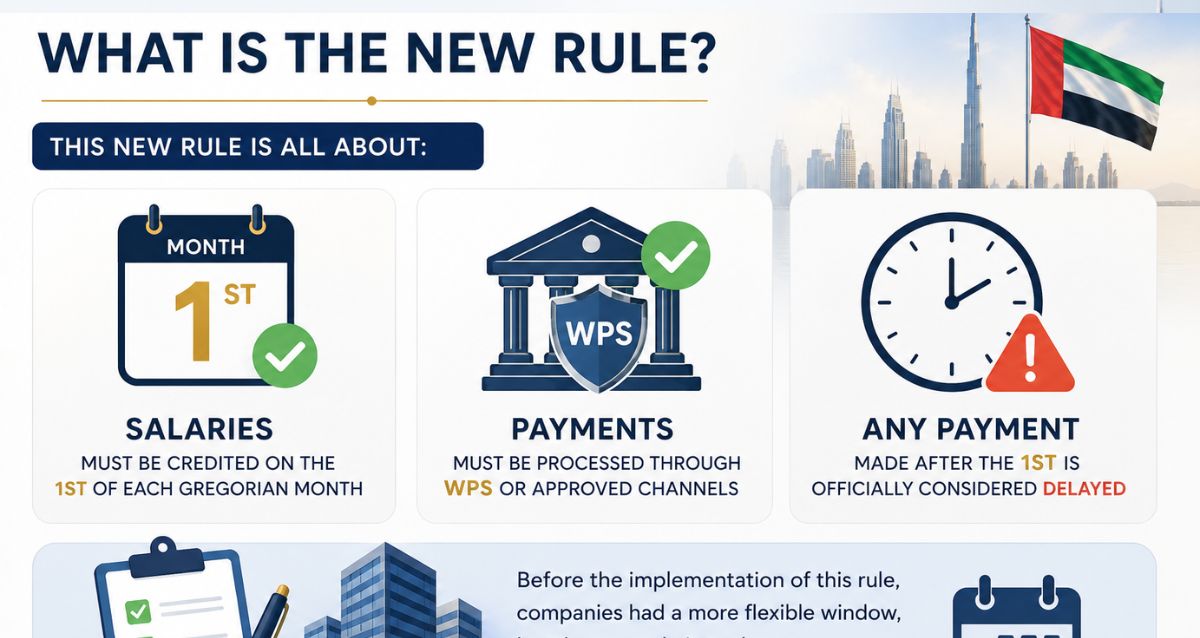
What Is the New Rule?
This new rule is all about:
- Salaries must be credited on the 1st of each Gregorian month
- Payments must be processed through WPS or approved channels
- Any payment made after the 1st is officially considered delayed
Before the implementation of this rule, companies had a more flexible window, but the new rule introduces a strict, unified deadline across the UAE private sector.
Why This Change Matters
The UAE government introduced this rule to:
- Ensure timely and predictable income for employees
- Strengthen compliance and transparency in payroll practices
- Reduce disputes related to delayed or unpaid salaries
- Enhance the overall labour market stability
Impact on Employers
The implementation of this new rule has a bigger impact on the businesses in shifting their payroll operations:
1. Tighter Payroll Timelines
It has become mandatory that all companies in the UAE must finalise their payroll between the 25th and 28th of the month to ensure salaries are processed on time.
2. Increased Compliance Pressure
The salary process is monitored electronically through WPS, which leaves little room for delays or manual adjustments by the employers.
3. Operational Adjustments
It is obvious that the Finance, HR, and accounting teams must coordinate with each other and work closely to avoid errors in salary files and bank transfers.
4. Cash Flow Management
Businesses must maintain sufficient liquidity before the end of the month to meet salary obligations without delay for their employees.
Impact on Employees
For employees, the benefits are clear and beneficial, since that:
- There will be financial stability, as they will be receiving their salaries on a fixed date and it helps them with their budgeting, rent payments, and financial planning.
- Employees gain more confidence on employers who comply with timely salary payments.
- This rule strengthens employee rights and makes it easier to raise complaints in case of delays.
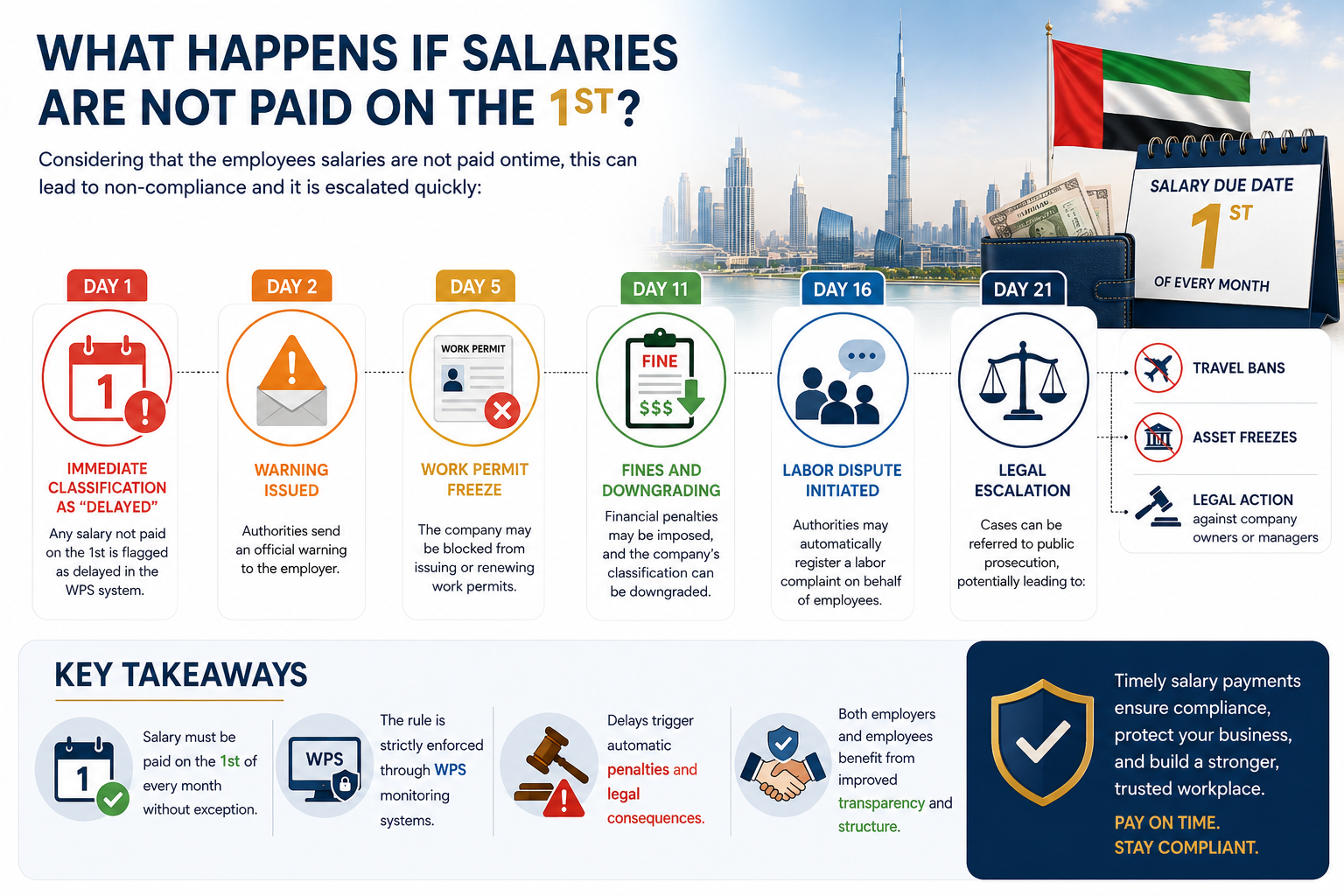
What Happens If Salaries Are Not Paid on the 1st?
Considering that the employees salaries are not paid ontime, this can lead to non-compliance and it is escalated quickly:
Day 1: Immediate Classification as “Delayed”
Any salary not paid on the 1st is flagged as delayed in the WPS system.
Day 2: Warning Issued
Authorities send an official warning to the employer.
Day 5: Work Permit Freeze
The company may be blocked from issuing or renewing work permits.
Day 11: Fines and Downgrading
Financial penalties may be imposed, and the company’s classification can be downgraded.
Day 16: Labor Dispute Initiated
Authorities may automatically register a labor complaint on behalf of employees.
Day 21: Legal Escalation
Cases can be referred to public prosecution, potentially leading to:
- Travel bans
- Asset freezes
- Legal action against company owners or managers
Key Takeaways
- Salary must be paid on the 1st of every month without exception
- The rule is strictly enforced through WPS monitoring systems
- Delays trigger automatic penalties and legal consequences
- Both employers and employees benefit from improved transparency and structure
Final Thoughts
This new salary rule is more than just a compliance requirement it represents a cultural shift in how payroll is handled in the UAE. For employers, it demands discipline and efficient financial planning. For employees, it provides security and predictability.
Organisations that adapt quickly will not only avoid penalties but also strengthen their reputation as reliable and responsible employers in the UAE’s evolving labour market.
How Flying Colour Tax Consultants Can Help
Adapting to new payroll regulations can be challenging, especially with the strict timelines and penalties now in place. Businesses must ensure their payroll systems, compliance, and internal processes are fully aligned with the latest requirements.
This is where expert guidance becomes essential.
At Flying Colour Tax Consultants, we support businesses across the UAE in streamlining their payroll processes, ensuring full compliance with MoHRE regulations, and avoiding costly penalties. From Wage Protection System implementation and salary structuring to ongoing compliance monitoring, our team provides end-to-end assistance tailored to your organisation’s needs.
FAQ
Q1. What is the new UAE salary payment rule effective June 2026?
From 1 June 2026, all private sector companies in the UAE are required to pay their employees' salaries on the 1st day of every Gregorian month for the previous month's work. Payments must be processed through the Wage Protection System (WPS) or approved banking channels. Any salary credited after the 1st is officially classified as delayed under the new regulation.
Q2. What happens if a UAE employer does not pay salaries on the 1st of the month?
Failure to pay salaries on the 1st triggers an automatic escalation process under WPS monitoring. On Day 1 the salary is flagged as delayed. By Day 2 an official warning is issued. By Day 5 the company may face a work permit freeze. By Day 11 financial penalties are imposed and the company's classification may be downgraded. By Day 21 cases can be referred to public prosecution, potentially resulting in travel bans, asset freezes, and legal action against company owners or managers.
Q3. Which companies are affected by the new UAE mandatory salary payment rule?
The new mandatory salary payment rule applies to all private sector companies operating in the UAE. This includes mainland companies, free zone entities, and branches of foreign corporations that employ staff under UAE labour law and are registered under the Ministry of Human Resources and Emiratisation (MoHRE) Wage Protection System.
Q4. What is the Wage Protection System (WPS) in the UAE?
The Wage Protection System (WPS) is an electronic salary transfer system developed by the UAE Ministry of Human Resources and Emiratisation (MoHRE). It allows the government to monitor and ensure that private sector employees receive their salaries on time and in full through approved banks, exchange houses, and financial institutions. Under the new June 2026 rule, WPS compliance is now tied to a strict monthly deadline of the 1st of each month.
Q5. How should UAE employers prepare for the new salary payment deadline?
To comply with the new rule, UAE employers should finalise their payroll processing between the 25th and 28th of each month to ensure salaries are credited on the 1st. Finance, HR, and accounting teams must coordinate closely to avoid errors in salary files and bank transfers. Businesses must also maintain sufficient cash liquidity before month-end. Companies are advised to review their WPS setup, salary structure, and internal payroll processes — or seek guidance from a payroll compliance consultant to avoid penalties.
To learn more about UAE New Salary Rule 2026: Salaries Must Be Paid on 1st Every Month, book a free consultation with one of the Flyingcolour team advisors.
Disclaimer: The information provided in this blog is based on our understanding of current tax laws and regulations. It is intended for general informational purposes only and does not constitute professional tax advice, consultation, or representation. The author and publisher are not responsible for any errors or omissions, or for any actions taken based on the information contained in this blog.