

UAE VAT Changes from 1 October 2026: What Cabinet Decision 149 Means for Your Business
The UAE is tightening its VAT rules again. Cabinet Decision No. 149 of 2026 updates the VAT Executive Regulation (Cabinet Decision No. 52 of 2017), and most changes start on 1 October 2026. The one big exception is the new way of calculating partial input tax recovery, which comes later, in 2028 for most businesses.
Here is what's changing and what to do about it.
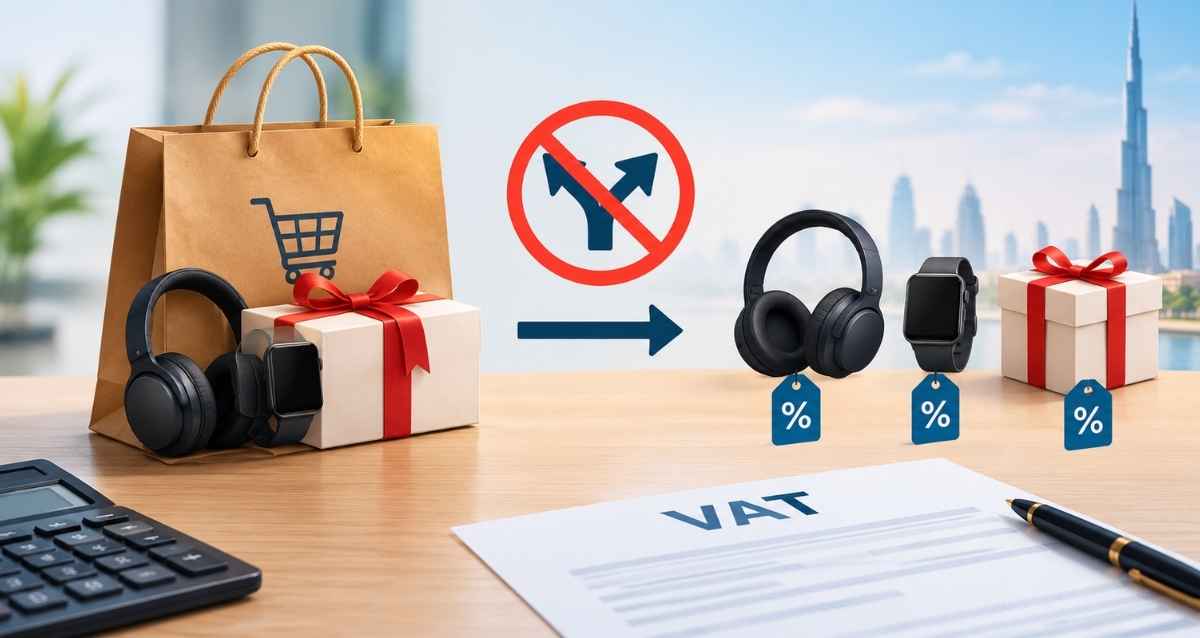
1. Bundled sales can't be split just to get a better VAT rate
What's new: If a package is really one product or service, you can't break it into pieces to apply different VAT rates. A package whose parts are closely tied together is treated as one supply and takes the VAT treatment of its main component.
Who's affected: Anyone selling bundles, such as hotels offering a room plus breakfast or an airport transfer.
What to do: Review your pricing and contracts. Listing items separately on an invoice won't protect you if the deal is really one package.
2. Profit Margin Scheme: no claiming twice
Second-hand dealers normally pay 5% VAT on their profit, not on the full sale price. What's changed is how you work out the purchase price. Extras like transport, agent commissions, auction fees, or refurbishment can now be added to it only when you weren't able to recover the VAT on them.
So if you've already claimed that VAT back, you can't use the same costs to shrink your margin as well. Take the benefit once, not twice.
3. Employee benefits: recovering VAT is harder now
If you provide benefits to your staff, expect a closer look at what you can claim back.
- Free zones: VAT on benefits required by labour law can now be recovered in any free zone, financial or not. Before, it was limited to "Free zone Designated Zones."
- Staff housing: Accommodation you provide for employees no longer qualifies, unless MOHRE specifically requires it.
- Contracts and HR policies: Having a benefit written into an employment contract or HR policy won't be enough by itself. The FTA will publish the conditions that apply.
It's a good time to go through your health insurance, housing, and other perks and sort out which are legally required and which are optional.
4. Big cash payments: no VAT recovery
If you pay cash for a large purchase, you won't be able to claim the input VAT back. The exact limit hasn't been announced yet. A Ministerial Decision will set it.
The easiest way to stay safe is to pay for big purchases by bank transfer or another method that leaves a clear trail. Make it a company rule, so nobody has to decide each time.
5. Capital Assets Scheme: a small wording tweak
Nothing changes in the numbers. The AED 5 million threshold stays, and so do the adjustment periods of 10 years for real estate and 5 years for other assets. The law now says "business asset" where it used to say "a single item of expenditure."
If you work in real estate, take a look at your asset register and make sure capital assets aren't mixed up with stock-in-trade.
6. Partial VAT recovery: a new method from 2028
This is the biggest change in the decision, though it won't hit straight away.
If you make both taxable and exempt supplies, you've been working out how much input VAT you can recover by comparing your recoverable input tax with your total input tax. Under the new method, you'll look at your sales instead. Divide the value of your taxable supplies by the value of all your supplies, and that gives you your percentage.
Two things to know. Reverse charge receipts and sales of capital assets don't count in the calculation. Government entities and charities carry on with their current method.
The new method starts with the first tax year that begins after 1 October 2027. For a January to December year, that's 1 January 2028.

Quick readiness checklist
|
Change |
Starts |
What to do |
|
Bundled supplies |
1 Oct 2026 |
Check that your VAT treatment matches what you're actually selling |
|
Profit Margin Scheme |
1 Oct 2026 |
Don't include costs whose VAT you've already recovered |
|
Staff costs and housing |
1 Oct 2026 |
Separate required benefits from optional perks |
|
Cash payment block |
1 Oct 2026 |
Pay for large purchases electronically |
|
Capital assets |
1 Oct 2026 |
Update your asset register |
|
Partial recovery method |
Tax year after 1 Oct 2027 |
Work out the impact before 2028 |
How can Flying Colour Tax Consultant help?
These changes affect more than your VAT return. They reach into your contracts, HR policies, payment habits, and accounting systems, so it pays to have someone look at everything together.
We can:
- Review your bundled supplies: We read through your sales contracts and check them against the new rules.
- Audit your employee expenses: We look at your staff costs and housing so you keep the VAT recovery you're entitled to.
- Model the new apportionment method: If you're partially exempt, we'll show you what the 2028 change means for your actual numbers.
Not sure how the 1 October changes affect your business? Contact Flying Colour Tax Consultant and we'll put together a VAT impact assessment for you.
FAQ
1. What is Cabinet Decision No. 149 of 2026?
It amends the UAE VAT Executive Regulation (Cabinet Decision No. 52 of 2017). The majority of the amendments take effect on 1 October 2026, while the new calculation method for the partial input tax recovery will enter on 1 January 2028.
2. When will the new UAE VAT rules be implemented?
Most of the new rules, including adjustments to the scope of supplies on a general tax regime will become effective on 1 October 2026. However, the new calculation method for the partial input tax recovery will enter on 1 January 2028, i.e., the first tax period starting on 1 January 2028, if the tax year is 1 January – 31 December.
3. Is it possible to “undo” a bundled supply to receive a VAT benefit?
No, a supply of bundled goods and services cannot be “undone.” The amended Executive Regulation defines that supplies of bundled goods and services are regarded as a composite supply and a supply of goods or services that are closely related to the principal supply. Therefore, if the supplies are inseparable, they must be taxed at the rate applicable to the principal supply. Bundling supplies and listing them separately in the invoice will not allow claiming a VAT benefit.
4. What businesses are impacted by the amended bundle supply rules?
All businesses that apply bundled supplies on a general tax regime. For example, those providing accommodation, food, and transport, such as hotels offering airport transfers. Thus, businesses need to review their current supply contracts to ensure that the supplies are correctly stated in invoices and taxed.
5. What changes were made to the UAE VAT Profit Margin Scheme?
The amended regulation introduces changes to calculating the purchase price in the Profit Margin Scheme, i.e., the costs included in the scheme. In particular, the costs of transportation, agents’ commissions, auctions, and reconditioning costs are taken into account only if the taxpayer is not entitled to claim VAT on them. If a taxpayer has reclaimed the input tax on these costs, they are not included in the purchase price.
6. Are UAE employers entitled to reclaim VAT on employee benefits?
Only part of the benefits received by employees are eligible for input tax deduction and credit. In particular, benefits mandated by the UAE Labour Law are now fully eligible for VAT refunds in the UAE Free Zones, not only the Designated Zones. However, the benefit of accommodation is no longer eligible, unless explicitly mandated by MOHRE. Furthermore, a contractual or policy provision is not sufficient to claim a VAT refund on employee benefits. The FTA will issue regulations outlining the benefits.
7. Will cash payments for large purchases be disallowed for VAT purposes?
Yes, cash payments for large purchases will be disallowed for VAT input tax purposes. The regulation states that the amount of a supply of goods, works, or services that cannot be eligible for input tax deduction or credit, if paid in cash, will be determined by the Minister. The exact threshold will be determined by the Minister’s Decision, and businesses making large cash purchases may be impacted.
8. Were there any changes to the Capital Assets Scheme?
There were no changes to the Capital Assets Scheme. The threshold of AED 5 million remains the same, as well as the 10-year adjustment period for real estate assets and 5-year adjustment period for other assets. The only change was that the regulation refers to “business asset” rather than “a single item of expenditure.”
9. How to calculate the partial input tax recovery from 2028?
Effective from 2028, the partial input tax recovery is calculated by determining the ratio between the taxable supplies and total supplies. This rule replaces the calculation by comparing the recoverable input tax and total input tax. Input VAT on reverse charge purchases and sales of capital assets are excluded from the calculation.
10. Who will be impacted by the new partial input tax recovery calculation?
Businesses that make both taxable and exempt supplies or that make supplies of goods or services on a general tax regime and government-approved activities, such as government entities and non-profit organisations, will be impacted. Furthermore, businesses that are partially exempt from VAT will also be impacted and should consider the impact before 2028.
To learn more about UAE VAT Rule Changes from 1 October 2026, book a free consultation with one of the Flyingcolour team advisors.
Disclaimer: The information provided in this blog is based on our understanding of current tax laws and regulations. It is intended for general informational purposes only and does not constitute professional tax advice, consultation, or representation. The author and publisher are not responsible for any errors or omissions, or for any actions taken based on the information contained in this blog.